
There’s no denying that SpaceX’s satellite internet service, Starlink, is an impressive feat of engineering. But cool, space-based tech doesn’t mean it’s the best connectivity option for your home or business here on Earth.
I’m the CEO of a proudly land-based fiber company, so I’m biased, but the facts are clear: Compared to satellite tech, fiber:
These differences will only become more vital as your household's data needs—and, importantly, those of the households around you—grow.
To put it another way: Starlink looks futuristic, but fiber is actually built for the future.
Internet access shouldn’t depend on the time of day(but satellite internet often does)
Starlink customers share network access through satellites serving their area. If there aren’t a lot of other Starlink customers around, it’s perfectly fine. The problem comes when lots of people around you are streaming, uploading, and video calling. Starlink says users may “experience varying or slower speeds during these times of peak usage,” typically between 6 and 11 PM.
Or in other words, evenings.
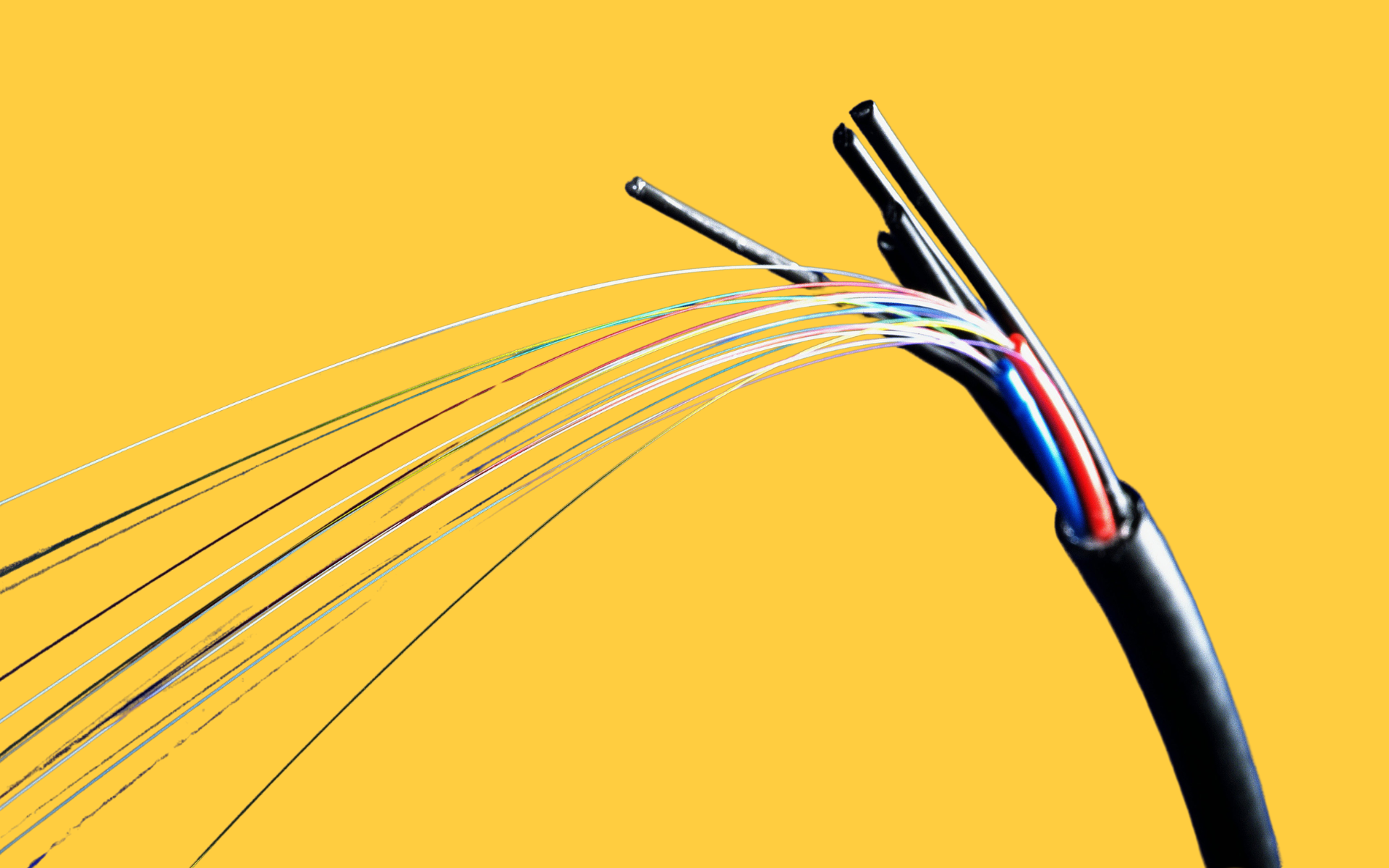
Fiber is a different beast altogether. Information travels through strands of fiber-optic cable using pulses of light. All these signals can travel simultaneously without getting in one another's way, allowing fiber networks to handle enormous amounts of data. Fiber networks, by their very nature, support substantially more capacity than a satellite-based network.
This differentiation will only become more important in the coming years. Consider that in 2018, the average monthly US household consumed 269 GB of data, but by 2026, that number shot up to 711 GB. This trend won’t just continue; it’ll accelerate as more and more people come online with more and more smart devices featuring more and more advanced capabilities.
Quality internet is increasingly tied to the bandwidth of your provider and their technology.
There are no weather interruptions underground
In most situations, Starlink will probably provide a good experience to its customers. At least when there’s a crystal-clear connection between you and the satellites.
According to Starlink’s own FAQs, “during typical storms or weather events, you may notice short drops or interruptions in service” and “significant weather can cause service degradation due to attenuation of the radio signals.”
Fiber, on the other hand, travels through physical infrastructure that’s buried underground and protected from any atmospheric impact. That makes fiber an especially strong choice for a service your household increasingly depends on every day, not just sunny, clear ones.
Fiber is fast in both directions
Download speed gets most of the attention, but it's only half of your internet connection.
Uploads matter when you're on a video call, backing up photos, sending large files, uploading videos, using cloud applications, or livestreaming. Starlink's current residential offerings can deliver download speeds in the hundreds of megabits per second, but upload speeds are considerably lower. Starlink’s own specs show that the range of average network speed for non-priority-tier residential users actually falls below the FCC’s definition of broadband (100 Mbps download/20 Mbps upload).
Fiber, on the other hand, can provide symmetrical connectivity, meaning your upload connection can be just as capable as your download connection.
That's important in homes where we're not just downloading things from the internet; we're constantly sending information back to it.
Distance makes the difference
Starlink uses a low-orbit array of satellites, which has dramatically improved speeds over previous generations of communication satellites.
But they still are subject to the speed of light.
With a satellite network, users must communicate wirelessly with equipment orbiting 300 miles above (or roughly the distance between Denver and Albuquerque), meaning there’s a strict Einsteinian limit on speed, no matter the orbit.
With fiber, the distance is far less, translating into extremely low and consistent latency, something you'll especially notice in applications where lag matters, like online gaming, video calls, remote work, cloud applications, and other real-time services.
And if fiber hasn't reached you yet?
In some areas, running fiber directly to every home isn't practical yet. That doesn't automatically mean satellite is your best, let alone only, alternative.
Core Fiber's next-generation wireless network is powered by our fiber infrastructure and offers plans starting at $60 per month, with speeds up to 1 Gig in available areas. That gives many rural households another option for high-speed, low-latency connectivity without depending on a satellite hundreds of miles overhead.
Interested? Reach out to one of our Core Advocates, knowledgeable US-based service reps who can help you make the switch from whatever service you have to a tier that works best for your home.
Starlink deserves credit for dramatically improving access to satellite internet. In places without strong terrestrial broadband infrastructure, it can be a good solution.
But when fiber—or fiber-powered next-gen wireless—is available, you don't have to settle for good enough internet.

Ready to level up your internet?
Enter your address to see available plans and sign up online


